

About Jenny Ross
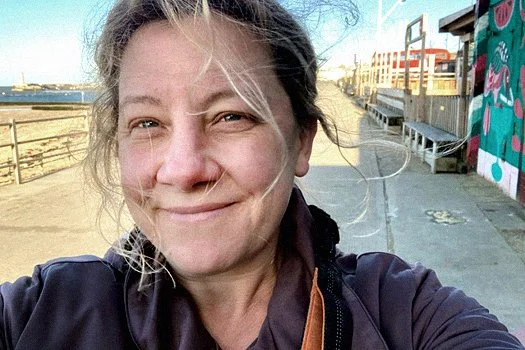
I'm Jenny. I set up Collective Discovery in 2020 after a decade of independent consultancy, because I wanted to collaborate more deeply with others on long-term change — and be more explicit about the values that underpin my work.

These values are the foundation for the Collective Discovery network: we are open, curious, brave, inclusive, caring, and connected.
I’ve spent my career grappling with inequality and injustice — and with a simple, stubborn question: why are things the way they are, and how could they be more equitable?
That curiosity has shaped three decades of work spanning Westminster politics, international development across Africa, and supporting movements and organisations to make change happen.
What has become clear to me over time is that bringing about positive change is a collaborative effort — and that those closest to the issues should lead. And that we learn most by paying close attention to what’s actually working — not what we assume should work.
Early career: Learning how change works
My first roles were in political strategy, building a detailed understanding of how policy processes work and how power operates in formal spaces. I then began to focus on international issues, launching the first coordinated UK campaign for increased aid (which laid foundations for Make Poverty History) and founding Youth Stop AIDS, a youth-led solidarity movement that became central to UK campaigning on treatment access for two decades.
In 2004 I moved to Kenya, supporting movements for women’s and girls’ education across four countries, then civil society influencing work across nine. Working across different contexts taught me how local realities shape what's possible and what pathways for change might work.
A secondment to lobby the UN Security Council in New York — once my dream job — proved disillusioning. Watching ambassadors appear bored during briefings on gross human rights abuses crystallised my growing sense that formal power structures are often not where meaningful change happens.
Back in the UK, I spent two years working on how tax and benefits policy could support unemployed people into long-term work, running focus groups with people experiencing policy failures and feeding that directly into government. That combination — formal policy engagement with a direct connection to what was happening in real life — felt very powerful and had a clear impact on policy.
Since 2010: Supporting others to make change
For the past fifteen years I've used what I've learned to support others. I've worked with hundreds of groups, organisations and collectives across different issues and contexts, focusing on three main areas:
Strategy
and facilitation
helping organisations, coalitions and networks think clearly about how they'll make change happen. This has included multi-country strategy processes (like Publish What You Pay's work across 40+ countries), Stonewall’s international strategy, Shelter’s social housing strategy and board-level strategic planning for organisations from Anti-Slavery International to the Women's Budget Group.

Learning
and evaluation
Designing approaches that help groups understand their progress on complex change. I've evaluated Africa-wide movements, trained hundreds of campaigners on influence and impact assessment, and developed frameworks that capture how change actually happens — not just what's easy to measure.

Supporting
funders
Helping grant-makers become more effective enablers of change by using their money, power and influence more strategically. This ranges from support for strategy development, designing grantmaking strategies and delivering masterclasses on how to fund influencing work.